Z Image
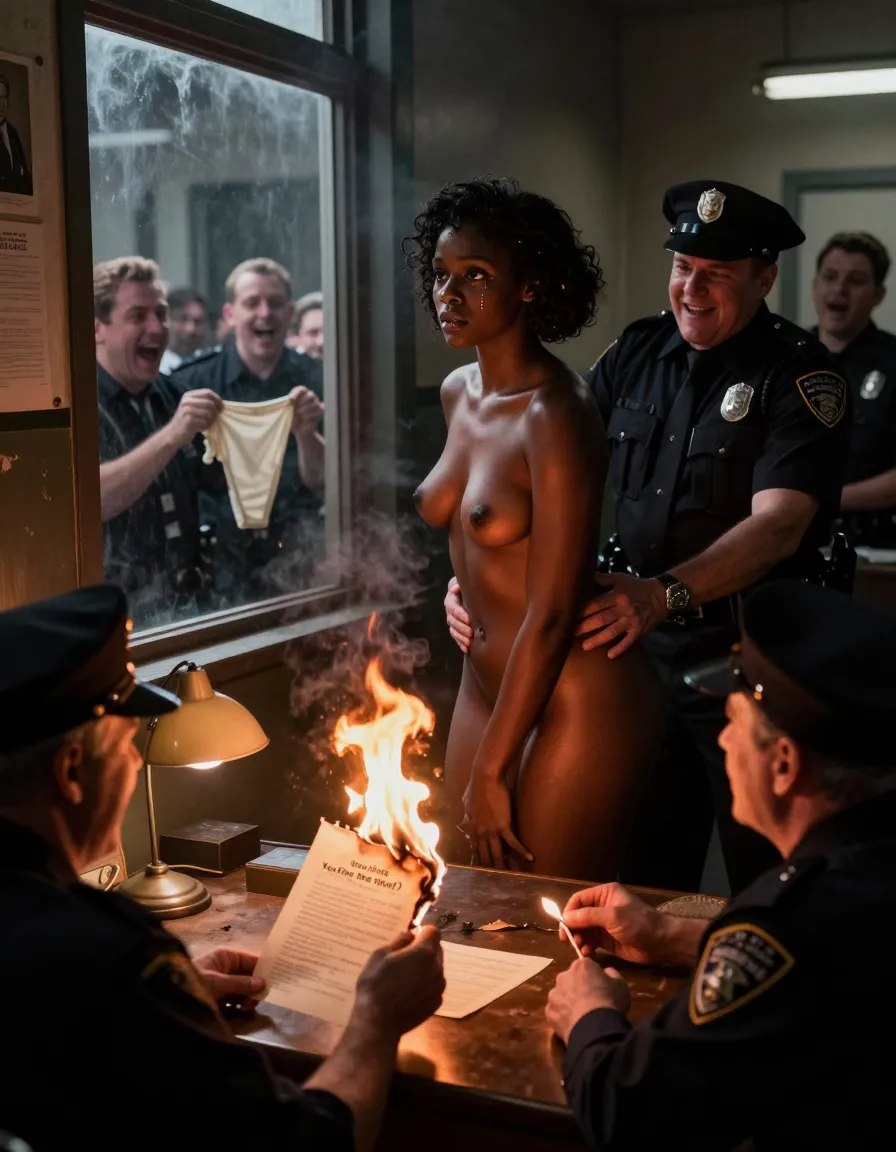
A hyperrealistic, cinematic image capturing a scene of absolute hopelessness in a 1950s American po…
A hyperrealistic, cinematic image capturing a scene of absolute hopelessness in a 1950s American police station. In a full police station, the big central hall…
Details
- Type
- Z Image
- Dimensions
- 896 × 1152
- Checkpoint
- Z Image Turbo
- Created
- Wait Time
- 24 sec
- Likes
- 1
- Comments
- 0
- Generation Settings
- euler / simple · 9 steps · CFG 0
- Seed
- 230648840
Prompt
A hyperrealistic, cinematic image capturing a scene of absolute hopelessness in a 1950s American police station. In a full police station, the big central hall, The camera is positioned to create a powerful, layered composition, with the immediate horror in the foreground and the human cost in the mid-ground. The style remains that of a gritty, photo-realistic film from the era, in slightly muted brown colors. standing In front of the desk is a nude black woman, She is the center of attention, she is standing by the large interrogation window and forced to look outside, forced to look out, the policemen are making fun of her naivity ,( the policemen ae mocking her :1.3) policemen outside mocking her simulating to be on the lookout,She is the only woman in the room,, she is presented from inside the office to the outside of the interviewing window, (undertitle; You find the thief), **Visual Foundation:** - **Setting & Atmosphere**: The oppressive police office is now a stage for a final, symbolic act of cruelty. The grimy, peeling walls and cluttered wooden desk are bathed in the dual light of a sickly yellow desk lamp and the flickering, dangerous orange of a fresh flame. The cheap, hand-lettered cardboard sign reading "PRESS CHARGES HERE" is still visible on the desk's corner, but its message is now a bitter, forgotten joke. - **Art Style**: Unflinching, hyperrealistic photography. The grain of the film is pronounced, the lighting is harsh and theatrical, and every detail is rendered with a chilling clarity that makes the scene feel like a captured historical atrocity. **Dynamic Elements:** - **The Foreground: The Burning**: Dominating the lower third of the frame is the lead police officer. He is sitting at the desk, He is closer to the camera, a large, triumphant figure whose back is mostly to us. His jowly face is turned in a three-quarter profile, captured in a moment of grotesque victory. In one meaty hand, he holds a single piece of paper—the woman's complaint—by a corner. It is engulfed in a vibrant, consuming flame. The fire illuminates his face from below, casting his features in a demonic, orange glow. His sneer is one of pure, unadulterated power, the act of burning the paper a final, definitive dismissal of her plea for justice. The lit match, still smoldering between his thumb and forefinger, is a tiny star of causality. In the background we see two hands gripping her hips, they are hands of a police officer who is intrigued by her body, - **The Mid-Ground: The Shattered Hope**: Standing just beyond the desk is the very young, curvy Black woman. She is presented like a trophy, She is young (almost 19) and has a super curvy young body (perfect young body :1.5),: broad black hips, (broad hips:1.4), a narrow waist and young breasts, (big breasts for her age :1.5), (young curves:1.5), (big ass :1.4), (big breasts:1.4), both her hands are on the desk, She is completely nude, her vulnerability stark against the flickering light. All defiance has drained from her face, replaced by a hollow, devastating emptiness. Her wide, dark eyes are not on the officer, but locked onto the burning paper. She is looking back and watches it as if she is watching her own future, her own rights, her very self being consumed and turned to ash. Her body is perfectly still, her shoulders slumped in a posture of total defeat. The light from the fire dances across her skin, highlighting the curves of her body and the single, small transparant tear tracing just outside her eye. She is the tragic focal point, the silent witness to her own erasure. - **The Background**: The second officer remains in the background, his snickering face now a hazy, out-of-focus presence in the gloom, he is looking down at her like she is some nice piece of candy. He has both hands on her hips, grabbing her hip like a trophy and watching down with desire,gazing hat her ass and hips, his look downward towards the back of her body, almost touching her with his cross, there is a big window with the whole policeforce watching and laughing, policemen outside, The third officer is inside close to the window remains in the background, his snickering face now a hazy, out-of-focus presence in the gloom, his laughter an implied sound that hangs in the acrid air. He holds her tiny underwear in two hands, proudly presenting it to the crowd outside, **Camera Position and Style:** - **Angle**: The camera is positioned lower than before, creating a dramatic low-angle shot. This makes the burning officer and the flame appear larger, more monumental, while simultaneously forcing the viewer to look up at the young curvy woman, sharing her perspective of looking at her hopes going up in smoke. - **Focus**: The focus is masterfully split. The foreground—the officer's hand, the burning paper, the flame—is tack-sharp, every flicker and ember captured with painful clarity. The focus then shifts to the woman's face and torso, rendering her expression of utter devastation in exquisite, heartbreaking detail. The officer's face is slightly softer, a looming threat. The background dissolves completely into darkness. **Technical Specs:** - **Resolution**: Ultra-high resolution, capturing the texture of the burning paper as it curls and blackens, the individual flames licking at the air, and the glisten of the small transparant tear just outside her eye. - **Color Palette**: A strict high-contrast black and white, but the "black" is now a complex mix of deep shadow and the rich, dynamic orange of the fire, which would be rendered in shades of brilliant white and grey, creating a powerful visual effect. - **Lighting**: The primary light source is now the fire from the burning paper, creating a dynamic, flickering key light that casts long, dancing shadows. This chiaroscuro lighting heightens the drama and emphasizes the destructive nature of the act. **Emotional and Sensory Details:** - **Emotion**: The image is a searing portrait of absolute despair. It's the moment hope dies. The triumph of the oppressor and the complete annihilation of the victim's spirit are laid bare in a single, devastating frame. - **Sensory**: You can almost hear the faint crackle of the burning paper, the officer's heavy, triumphant breathing, and the deafening silence of the woman's shattered world. You can smell the acrid smoke and feel the oppressive heat of the scene. **Final Output:** A hyperrealistic, cinematic masterpiece of despair. In the foreground, a triumphant, heavy-set 1950s police officer holds a piece of paper—the complaint—as it burns fiercely in his hand, his face lit by the flames in a demonic glow.
Negative Prompt
two women, white woman, smiling woman, policewoman, black policeman,
Snippets Applied
Cinematic, Negative, Sharp